









This Black History Month, history is being made on the Olympic ice. At the 2026 Winter Olympics, trailblazers like Laila Edwards and Erin Jackson are redefining what representation looks like in winter sports. Edwards, 22, became the first Black woman to play for Team USA in Olympic ice hockey and the first Black American to win Olympic gold in the sport. Jackson, a 33-year-old speed skater from Ocala, Florida, made history in 2022 as the first Black woman to win an individual Winter Olympic gold medal and in 2026 became the first Black woman to carry the U.S. flag at an Opening Ceremony. As the most streamed Winter Olympics in history, with over 5.3 billion minutes viewed so far (AOL News), millions are watching these women shine.
And yet, while the admiration for women on the ice is real and measurable, the story of who gets celebrated and why, deserves a much closer look because when we shift to the Summer Olympics, where Black women are dramatically more represented in sports like track and field, basketball, and gymnastics. The tone of public perception seems to change and I would love to explore some reasons why.
Historically, The Winter Olympics are overwhelmingly white. Studies estimate that nearly 95 percent of Winter Olympians globally are white, largely due to the cost of training, access to winter infrastructure, and generational wealth tied to sports like figure skating, skiing, and snowboarding. In 2026, only eight Black women represented Team USA. Worldwide, just 41 Black athletes total, men and women combined, are competing across all countries.
When the athlete pipeline ends up being disproportionately white, it becomes the dominant “visual norm.” Beautiful blondes and brunettes, pale skin, Eurocentric facial features, ballet-coded aesthetics, and slim body types become the familiar template for what audiences subconsciously associate with athletic excellence. That familiarity makes it easier to frame white men and women as “America’s sweethearts”.
And familiarity matters.
Psychologists call it koinophilia — the human tendency to prefer what looks familiar or typical within a population. In fast-paced digital environments, this effect becomes even stronger. As attention spans shrink and social media algorithms reward quick reactions, people rely more heavily on visual shortcuts to decide who feels graceful, trustworthy, or admirable. That helps explain why Winter Olympic coverage often feels wrapped in admiration. Female athletes are framed as elegant, resilient, and inspiring. Their emotional moments are described as vulnerability. Their confidence is called poise.
Black women are dramatically more represented in sports like track and field, basketball, and gymnastics. In some sprinting events, Black women make up the majority of elite competitors. This means that the visual and aesthetic norms shift. Hairstyles, body composition, movement styles, and expressions of confidence may no longer align with the historically familiar image that global audiences associate with elite female athleticism, which has been shaped for decades by predominantly white sports coverage.
And suddenly, the same confidence praised on ice can be labeled arrogance on the track.The same emotion described as vulnerability in one sport can be framed as instability in another.
Look at the difference in media coverage between Alysa Liu and Sha’Carri Richardson.
Alysa Liu (USA) won the women’s singles gold medal, marking the first U.S. victory in this event in 24 years. Alysa Liu is half-Chinese and half-white, colloquially known as Wasian. She is recognized for her striped, two-toned hair—a “raccoon” style featuring brown and blonde layers. he wears a prominent frenulum (or “smiley”) piercing that is visible when she smiles, which she has stated she initially pierced herself. She is portrayed as a Gen Z icon who is a relatable, grounded, and, “adorable” figure of the public eye, emphasizing her love for the sport and expression of individuality. Overwhelmingly positive coverage of her gold medal victory at the Milan Cortina Olympics, the first U.S. individual women’s figure skating gold in 24 years and Liu gained over 5 million new Instagram followers, surpassing other Olympians.
Now let’s look at 25 year old African American, Sha’Carri Richardson. She is one of the fastest women in the world in the 100 meters and won the U.S. Olympic Trials in 2021 with a blazing time of 10.86 seconds, making her a top Olympic medal contender that year. She went on to win the gold medal in the 100 meters at the 2023 World Athletics Championships, officially becoming a world champion. Similar to Liu, Sha’Carri Richardson is also unapologetically expressive with her bright colored hair, long nails, lashes, and bold unapologetic confidence makes her instantly recognizable. She is known for her explosive speed and attitude, she remains one of the most recognizable and accomplished sprinters in global track and field today.
However, Sha’Carri Richardson’s expressive style is debated as unprofessional or inappropriate and intersects with longstanding stereotypes about Black women being too loud, too aggressive, or “too ghetto”, that led to her suspension (Time Magazine).
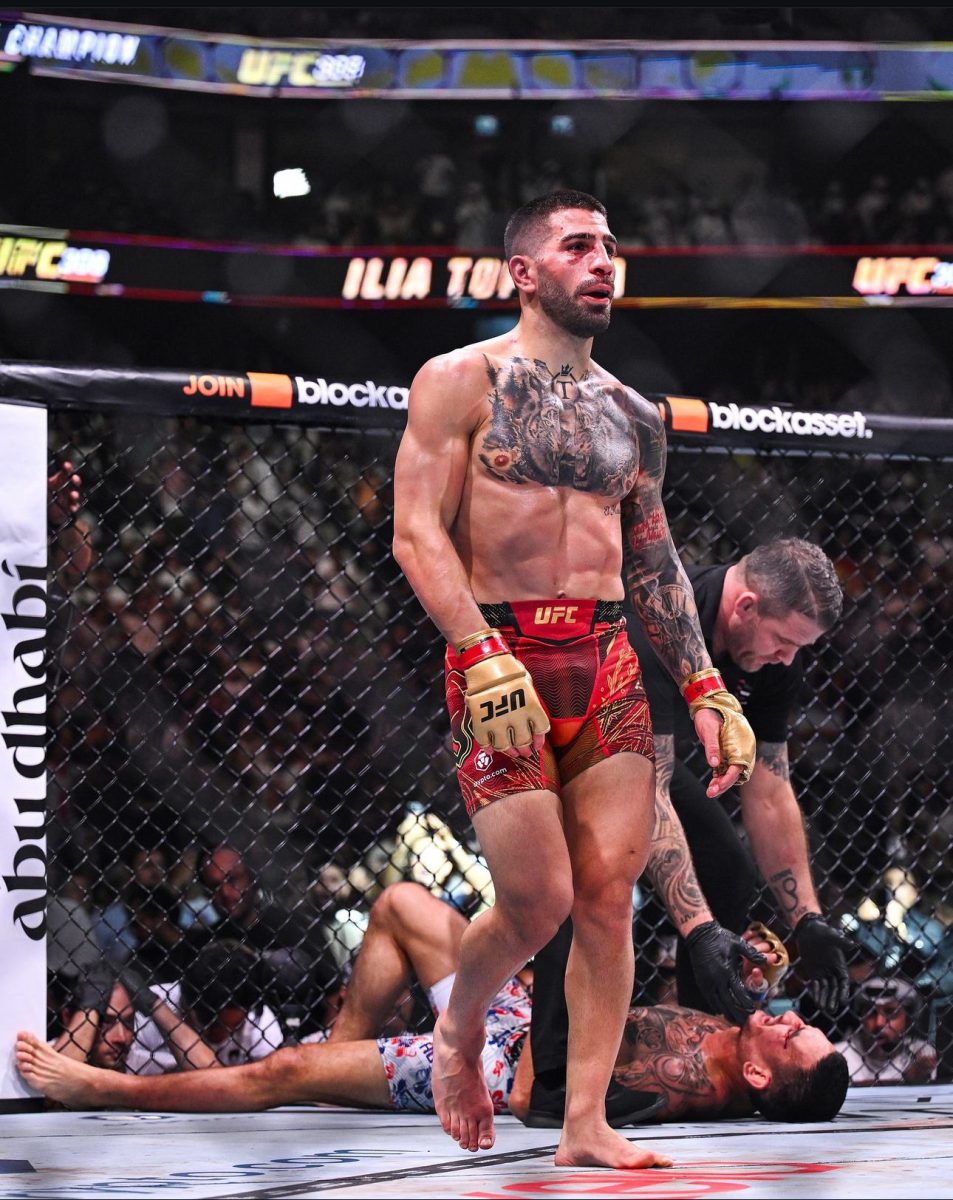
History inside figure skating itself tells a similar story. At the 2026 Winter Olympics, Ilia Malinin became the first skater to legally land a one-footed backflip in Olympic competition.At the 1998 Nagano Olympics, French skater Surya Bonaly performed a backflip, landing on one blade (a “one-foot” landing). Judges penalized her, and she finished 10th, with her move viewed as a rebellious act rather than a groundbreaking achievement.While Malinin is not at fault for the historical, unjust treatment of Bonaly, his celebration highlights a contrast in how the sport has treated white male skaters versus Black female skaters over the last 30 yearsThe issue is not that Winter athletes do not deserve praise. They absolutely do. Watching women dominate the ice, hearing the roar of the crowd, and seeing record-breaking streaming numbers proves that audiences deeply value women’s sports.
But admiration should not depend on familiarity.
Black women should not have to shrink their hairstyles, mute their confidence, or soften their expression to be seen as respectable. Both Winter and Summer Olympians sacrifice their bodies, their time, and their mental health to compete at the highest level. Both deserve narratives rooted in respect.
This Black History Month, as we celebrate frozen firsts and historic milestones on ice, we should also expand what excellence looks like in every season.
Girl power should not be selective. And neither should celebration.
⸻
Works Cited
ACLU. “Simone Biles, Sha’Carri Richardson, and How the Olympics Failed Black Women.” American Civil Liberties Union, 2021.
Biles, Simone. “Simone Biles.” Wikipedia, Wikimedia Foundation.
Bissinger, Buzz. “The Right Rooting Against America’s Olympic Athletes.” Vanity Fair, 2021.
“Nearly Twice as Many Americans Say They Will Watch Milano Cortina 2026 vs Beijing 2022.” Seton Hall University Sports Poll, 2026.
“NBC’s Winter Olympics TV Viewership Up 93% Through 5 Days.” Front Office Sports, 2026.
“Why Was Sha’Carri Richardson Suspended From Tokyo Olympics?”